


|
|
|
|
|
#1
 07-04-2006, 05:13 PM
|
||||
|
||||
|
train experts?
today we drove up to fowler indiana for a fair thingie... (the heart of the corn belt).
along the way i noticed the usual hundreds of grain cars along the tracks on the way up there, waiting for harvest, were all brand new. first i was impressed that the rail business is prosperous enough to justify new grain cars. second i noticed that they dont have the old style funnel shaped discharges on the bottom. there are instead two large half tube like structures on the bottom of each car. so anybody know how they unload them when they are like this? tom w
__________________
[SIGPIC] Diesel loving autocrossing grandpa Architect. 08 Dodge 3/4 ton with Cummins & six speed; I have had about 35 benzes. I have a 39 Studebaker Coupe Express pickup in which I have had installed a 617 turbo and a five speed manual.  [SIGPIC] [SIGPIC]..I also have a 427 Cobra replica with an aluminum chassis. 
|
|
#2
07-05-2006, 02:39 AM
|
||||
|
||||
|
What was the rail line? Like the coal unit trains which are put into a rotary dumper, these may also be turned upside down and dumped.
BTW, in case you hadn't noticed, business is up and the economy is good.
__________________
Regards Warren Currently 1965 220Sb, 2002 FORD Crown Vic Police Interceptor Had 1965 220SEb, 1967 230S, 280SE 4.5, 300SE (W126), 420SEL ENTER > = (HP RPN) Not part of the in-crowd since 1952.
|
|
#3
07-05-2006, 08:38 AM
|
||||
|
||||
|
dunno the line.
business is not up around here. prices are though. tom w
__________________
[SIGPIC] Diesel loving autocrossing grandpa Architect. 08 Dodge 3/4 ton with Cummins & six speed; I have had about 35 benzes. I have a 39 Studebaker Coupe Express pickup in which I have had installed a 617 turbo and a five speed manual. [SIGPIC]..I also have a 427 Cobra replica with an aluminum chassis.
|
|
#5
07-05-2006, 12:35 PM
|
||||
|
||||
|
AFIK, there aren't any rotary-dump grain service railcars. Tom W, what you probably saw was an ACF Center Flow™ hopper ...
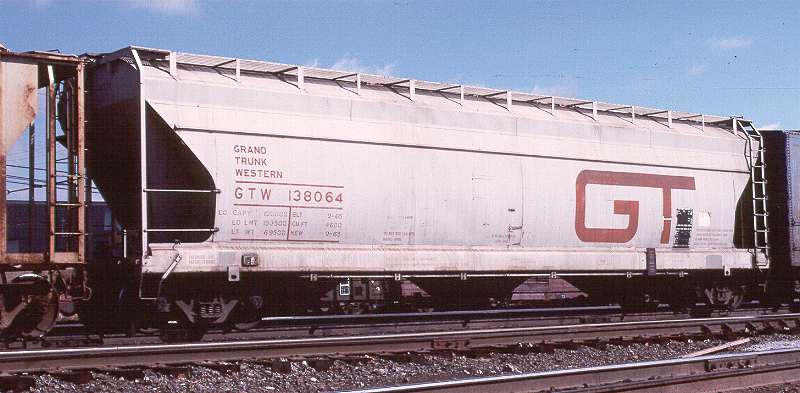 or possibly, one of these Canadian Government-owned cylindrical grain cars that have been manufactured by several companies. The Canadians have been trying to sell these cars for a while and maybe what you saw was some of them that have been repainted for the new lessor/RR/grain company. 
__________________
Never a dull moment at Berry Hill Farm.
|
|
#6
07-05-2006, 10:05 PM
|
||||
|
||||
|
Most of the new coal cars are rotary dump and I think the reason is out of necessity. Some coal is washed before it leaves the mine and will freeze in the car as it sits in a siding somewhere in the mountains while the railroad begs some engineer to come drive the train to it's destination.
|
|
#7
07-05-2006, 10:53 PM
|
||||
|
||||
|
Omegaman,
your hypothesis is clever; however, not quite correct. The dump cycle is designed to: #1 rapidly discharge the load #2 completely discharge the load. After years in rail service, I have encountered numerous rail cars returned to my facilities with material remaining in the car (and not from freezing I assure you). The coal industry survives by VOLUME in every aspect of the operations from extraction, processing, loading, unloading, and delivery. What some may describe as extreme measures are employed to maximize profits and minimize costs on a scale not unlike the automotive industry (and grain) to mention another "efficiency" expert. Imagine shipping out 50Ktons of material each month, and having 10% or more return to you. Somebody didn't get all they paid for. Naturally, for me it was a windfall. I re-sold the material, gaining sales on volume that cost 0 to produce/load. The negative came when I had to unload the remainder since the material contained was not compatible to what was to be loaded and shipped (pool cars, not a lease fleet). Walgamuth, You can look at a placard on the side of a railcar (it is usually Black, outlined in white with white lettering). There, you can read the build date, and more importantly, the reblt date. Many cars are "renewed" and appear new, when only the running gear and paint is refreshed... It is kinda a hobby to watch the placards on a slow-moving train at a crossing, and see how old some of the gear actually is.
__________________
RM Smith 1988 560SL "Where is it again that we are going, and why are we in this handbasket"?
|
|
#8
07-05-2006, 11:47 PM
|
||||
|
||||
|
thanks for the input. neither picture was what i saw yesterday. the top of the grain car with the three funnels on the bottom looked like that mostly but what i say looked brand new. the bottom looked a lot like the fuel tanks on the diesel locomotives. two large half cylinders. they appeared to be bare aluminum. the sides also looked to be bare aluminum. the wheel carriages were blue. they sure looked new and the bottoms were like nothing i have ever seen before.
thanks again. tom w
__________________
[SIGPIC] Diesel loving autocrossing grandpa Architect. 08 Dodge 3/4 ton with Cummins & six speed; I have had about 35 benzes. I have a 39 Studebaker Coupe Express pickup in which I have had installed a 617 turbo and a five speed manual. [SIGPIC]..I also have a 427 Cobra replica with an aluminum chassis.
|
|
#9
07-06-2006, 12:11 AM
|
||||
|
||||
|
Tom,
In my diatribe above, I forgot to ask you if you were sure the cars were grain cars. As you may be aware, the coal industry is undergoing a revitalization as mid-west coal is no longer thought to be the environmental monster it used to be. Seems western coal, lower in sulfides, has been found to contain enough mercury that it, too, needs scrubbing. The illinois basin coal, as well as other midwestern coal and southern coal reserves are now economically able to compete since "scrubbing coal" is scrubbing coal, whether it be for mercury or sulfides (a simplistic view, I agree). Have a look at the link below... It may be the car you saw. Click on coal cars, then rotary gon... http://www.trinityrailcar.com/railcars/index.html cheers!
__________________
RM Smith 1988 560SL "Where is it again that we are going, and why are we in this handbasket"?
|
|
#10
07-06-2006, 06:15 AM
|
||||
|
||||
|
well, walrus, i was all set to ridicule you since there were so many of them sitting idly in the middle of corn country 200 miles from our southern indiana coal fields, but just to humor i looked at the coal cars.
they are identical to the rotary aluminum coal car on the site you mentioned. is it possible they use them for grain too? or is it just where they have decided to store them? tom w
__________________
[SIGPIC] Diesel loving autocrossing grandpa Architect. 08 Dodge 3/4 ton with Cummins & six speed; I have had about 35 benzes. I have a 39 Studebaker Coupe Express pickup in which I have had installed a 617 turbo and a five speed manual. [SIGPIC]..I also have a 427 Cobra replica with an aluminum chassis.
|
|
#11
07-06-2006, 10:14 AM
|
||||
|
||||
|
Your guess is as good as mine... Commodities like coal and grain are volitile animals that highly compete for equipment. There are suits in court under litigation against the railroad and other industries, filed by grain consortiums, trying to address the seemingly unfair allotment of equipment present in the rail industry. If you do a quick search on "railcars" you will undoubtedly uncover several articles to the same.
Railcar availiblity was always a concern for me when I was shipping material by rail. There were occasions where I could not get equipment on a timely basis, and when I did, there was no guarantee the railroad would pull them and place them when the customer needed. My industry was minor compared to coal and other commodities. Demurrage was high if a car sat too long, and would happen from time to time due to the railroad flooding me with cars. It was feast or famine. In central texas, it was somewhat better than Tennessee or Alabama, but I had to load 50 cars as a unit, and had 48 hours to complete loading (or face seriously high demurrage and other fines). This cycle would replay 10 or so times per month. Customers that used to purchase 10-15 carloads were cast aside as the rr would not break the train, and those customers could not accept 50-car units. If only we as a nation had subsidized the rr to the extent we did trucking... What's that, you say? How did we subsidize trucking? We built ROADS everywhere...
__________________
RM Smith 1988 560SL "Where is it again that we are going, and why are we in this handbasket"?
|
|
#12
07-06-2006, 03:37 PM
|
||||
|
||||
|
Quote:
Those coal gondolas that Tom saw in the middle of nowhere were being stored. Around here, western coal is transported to steam generating stations in utility-owned railcars. For example, the Fayette Power Project (FPPX and LCRX reporting marks) has about 1500 rotary-dump coal gondolas which is approximately 10-11, 130 car trainsets and at any given point in time 8 or 9 of those trainsets will be out on the road between the Fayette plant and Wyoming with loads or empties. Wear and tear, routine maintenance, accidents and railroad scheduling all act to reduce the number of railcars available for hauling coal to the plant thus, to assure reliable timely delivery of the coal, Fayette owns more cars than they really need to meet the fuel delivery demand. Whenever there's excess hauling capacity in relationship to the fuel demand, the unneeded trainsets will be set out in storage. Grain railcars are treated similarly but their cycle is seasonal - tied to the harvest.
__________________
Never a dull moment at Berry Hill Farm.
|
|
#13
07-06-2006, 05:11 PM
|
||||
|
||||
|
so those cars are open on top?
couldnt tell from my viewpoint. it is interesting all the stuff you can learn here on a benz site. tom w
__________________
[SIGPIC] Diesel loving autocrossing grandpa Architect. 08 Dodge 3/4 ton with Cummins & six speed; I have had about 35 benzes. I have a 39 Studebaker Coupe Express pickup in which I have had installed a 617 turbo and a five speed manual. [SIGPIC]..I also have a 427 Cobra replica with an aluminum chassis.
|
|
#14
07-06-2006, 05:32 PM
|
||||
|
||||
|
Quote:
The painted end of the car has a coupler that can pivot or rotate. When the car is unloaded, it is literally rolled over and the coal is dumped out, all 200,000 pounds of it. The rotary unloader is an interesting beast. When the unloading process is started, the locomotives are driven through the unloader and remain coupled to the train. The first car is spotted at the proper point in the unloader and the train brakes are released. The unloader dumps the car, rights it, and pulls the entire train (~15,000 tons) forward one car length and repeats the operation until all the cars are empty. It's been a while since I read about unloader operation but I seem to recall that a whole train (>100 cars) could be unloaded in less than 90 minutes.
__________________
Never a dull moment at Berry Hill Farm.
|
|
#15
07-07-2006, 12:35 AM
|
||||
|
||||
|
wow! i never would have guessed. makes sense though.
i have been driving past all those parked rail cars for years assuming they were grain cars waiting for the harvest! when they were building the panama canal the breakthrough techniques were instituted by a railroad man, stevens i think was his name. he would have them lay track along the edge of the excavation. they would load the rail cars with large steam shovels bucoles i think maybe was the name of the shovels or similar, then they would pull a whole train of loaded cars along side where they were moving the earth and the sides would drop down and they would take a dozer and push all the dirt off the train at one time. so they could unload it really quickly too. they used similar techniques for the hoover dam for earth moving. tom w
__________________
[SIGPIC] Diesel loving autocrossing grandpa Architect. 08 Dodge 3/4 ton with Cummins & six speed; I have had about 35 benzes. I have a 39 Studebaker Coupe Express pickup in which I have had installed a 617 turbo and a five speed manual. [SIGPIC]..I also have a 427 Cobra replica with an aluminum chassis.
|
 |
| Bookmarks |
|
|


 Linear Mode


