Quote:
Originally Posted by kerry

Is there a lineman here? In our neighborhood the electricity is carried on poles. 3 wires and up on top of the poles now and again are three big fuses. There's an insulator and about a 14" fuse that carries power around it. Periodically, squirrels will short out the wires at a transformer or something and one of these fuses pops. It makes a big bang like a shotgun blast. You can tell the problem because the fuse hangs down. On my block, when one fuse pops, everyone loses all their electricity. I have a rental property 4 blocks away. When one of the fuses pops on that block, only about half the electricity goes out in the houses. It's kind of a PIA because tenants (and homeowners) then think it's an internal problem to the house since some electricity works. Why the difference between the two blocks?
|
Use this picture to follow what I am saying
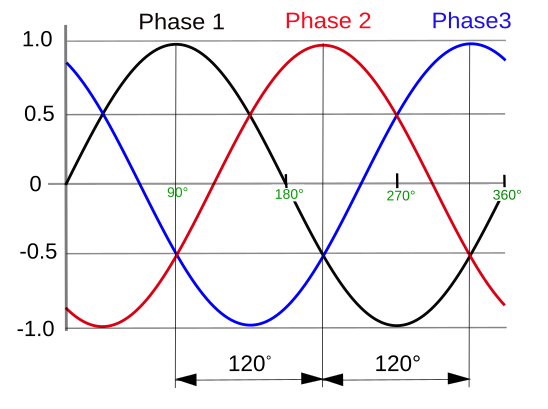
Homes for the most part use a single phase power. With the wires coming to the home there are 2 insulated and one Common or ground. When One of the 2 loses its path only half of the circuts in that panel will work( Just like BC said) There are 2 sides to a transformer. When the suplly side loses a leg your house goes dark. If the downstream side loses a leg only one of the three "loads" on the transformer loses everything While the other 2 lose half. I hope this helps.