


|
|
|
|
|
|
|
#1
 10-22-2016, 02:40 PM
|
|||
|
|||
|
Quote:
"The squeaky arse gets the grease."  Stretchman, would you walk us through your understanding of the mechanism of engine stalling and failing to restart for 1-2 minutes as a function of some fault with a vehicle speed sensor (VSS)? 
|
|
#2
10-23-2016, 11:54 AM
|
||||
|
||||
|
Quote:
From what I can make out there are only two ways in which the CIS gets adjusted by the ECU: (1) The electro hydraulic actuator (EHA) and the air idle control valve. Everything else that goes to the ECU pin is a measurement to help adjust these two transducers. The road speed sensor seems to get used to interface a setting between the EHA and the air idle control valve. Essentially if the road speed sensor is saying "we're still moving" the ECU doesn't activate the air idle control valve in time and the engine stalls. Because the setting of the air idle control valve (and probably the EHA) is all cocked up (technical term - I don't want to dazzle you with science here!) the ECU is stopping the engine from starting again because the fuel mixture is all cocked up. Stamping down hard on the accelerator in panic and turning the ignition key might help an engine to chug a bit but until the ECU "realises" that the car isn't moving things might remain a bit frustrating... ...for some strange reason that I haven't gotten to the bottom of yet - the signal from the throttle position switch when closed seems to have less of an effect on the system than the road speed sensor...
__________________
1992 W201 190E 1.8 171,000 km - Daily driver 1981 W123 300D ~ 100,000 miles / 160,000 km - project car stripped to the bone 1965 Land Rover Series 2a Station Wagon CIS recovery therapy! 1961 Volvo PV544 Bare metal rat rod-ish thing I'm here to chat about cars and to help others - I'm not here "to always be right" like an internet warrior 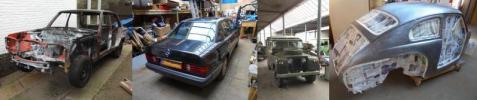 Don't leave that there - I'll take it to bits!
|
 |
| Bookmarks |
|
|


 Hybrid Mode


