


|
|
|
|
|
|
|
#1
 05-07-2015, 08:50 PM
|
||||
|
||||
|
Thanks!

|
|
#2
05-27-2015, 12:47 AM
|
|||
|
|||
|
I'm new to a 240D and might only use the powertrain in a non rotten pile........ but the turbo idea has been an interesting read at the least.
mine is a 1980 and only says 68 hp. if a turbo could bring it near 100 it would not need to be flogged as hard, and might even get a taller gear set/tire size. this has been good brain fodder. prost 
|
|
#3
05-27-2015, 04:48 AM
|
||||
|
||||
|
__________________
1992 W201 190E 1.8 171,000 km - Daily driver 1981 W123 300D ~ 100,000 miles / 160,000 km - project car stripped to the bone 1965 Land Rover Series 2a Station Wagon CIS recovery therapy! 1961 Volvo PV544 Bare metal rat rod-ish thing I'm here to chat about cars and to help others - I'm not here "to always be right" like an internet warrior 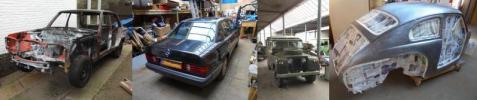 Don't leave that there - I'll take it to bits!
|
|
#4
06-26-2015, 11:51 AM
|
||||
|
||||
|
I might hey going on this soon, we'll see, still undecided on what turbo to use, I'm thinking a 15g (?) since I believe they're pretty small (I think they come on other ~2.5ish litre diesel engines) and should hopefully spool pretty quick but have a low max boost (I don't want to boost past 5-6psi). I need to hunt one up and work on my manifold, probably a shortened 617a with an adapter
__________________
1982 300D Turbodiesel, daily driver. Mods so far: Fram 8038 paper filter, 4 brake light mod, Gen II w126 (front) rotors/calipers, boost turned up to 12lbs, non-egr manifolds, water/methanol injection, 4-speed manual 1980 300SD Turbodiesel, project car, nearly ready to hit the street 1974 240D, New paint
|
|
#5
06-29-2015, 10:34 AM
|
||||
|
||||
|
It would be better to drop in a turbo charged engine.For one they are built to handle the stress.I would just add propane injection to a non turbo motor.It can give a added 100hp or more.
__________________
1999 w140, quit voting to old, and to old to fight, a god damned veteran, deutschland deutschland uber alles uber alles in der welt
|
|
#6
06-30-2015, 01:57 AM
|
|||
|
|||
|
For argument's sake... propane is harder on engine internals then boost and proper fueling.
Propane and nitrous ignite at a lower temperature which basically creates uncontrolled detonation. Power increases due to the massive spike in cylinder pressure. High cylinder pressure is what causes part failure. Yes it does work but there are much safer/more reliable ways of making power. Boost on the other hand can be controlled. Monitor EGTs and with proper tuning, an NA-T setup can be reliable. Just don't expect it to make massive power gains on stock internals and last as everything has its limits. Also keep in mind that the engine was designed to operate at a set power point. As power increases, engine life expectancy decreases accordingly. This holds true for any engine... the further you push the envelope, the faster parts will wear/fail. Sure you can cram enough air/fuel in the cylinders to double/triple the factory power output... But don't plan on the engine lasting 500k+ miles. Now... my experience comes from pushing the envelope of a small displacement Cummins... but the principals still apply.
|
 |
| Bookmarks |
|
|


 Hybrid Mode


